Loose Parts
Have you ever watched a toddler stack containers in the kitchen or align seashells on the beach? If so, you’ve witnessed the power of loose parts play. The idea of loose parts has recently captured the attention of early childhood educators, although it is not a new concept by any means.
“Loose parts” is a term that was first introduced in the 1970s by a British architect named Simon Nicholson. Nicholson believed that loose parts encouraged creativity. He believed that if we want to be innovative and original, then we need to utilize a variety of materials that can be carried, moved, stacked, combined, aligned, taken apart and put back together again without direction. Think natural materials like seashells and pebbles as well as upcycled materials such as cupcake molds and embroidery hoops.
When the children at NPCC explore with loose parts, we find that they spend more time exploring the properties of the objects. They adapt and manipulate the loose parts sometimes in ways that we, as adults, may not have considered. Swatches of fabric become a way to play peek-a-boo, placemats for imaginary restaurants, or swaddling for baby dolls.
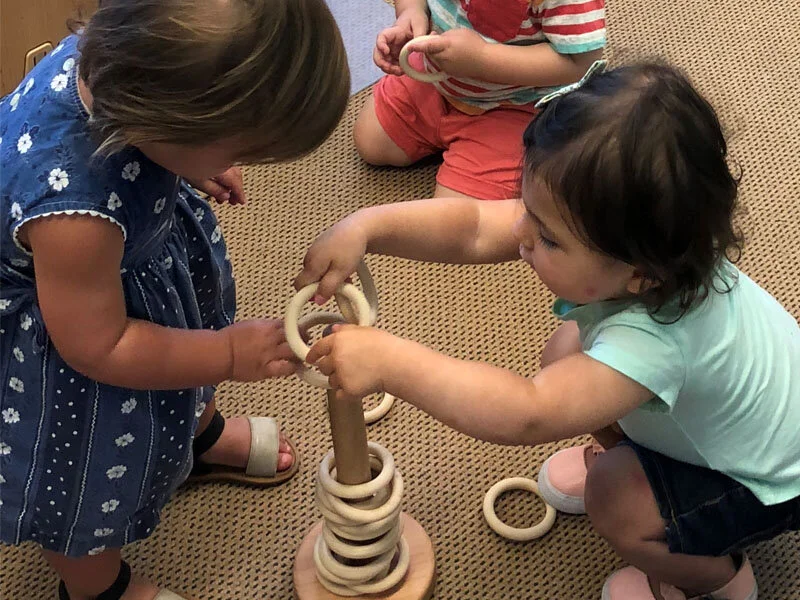
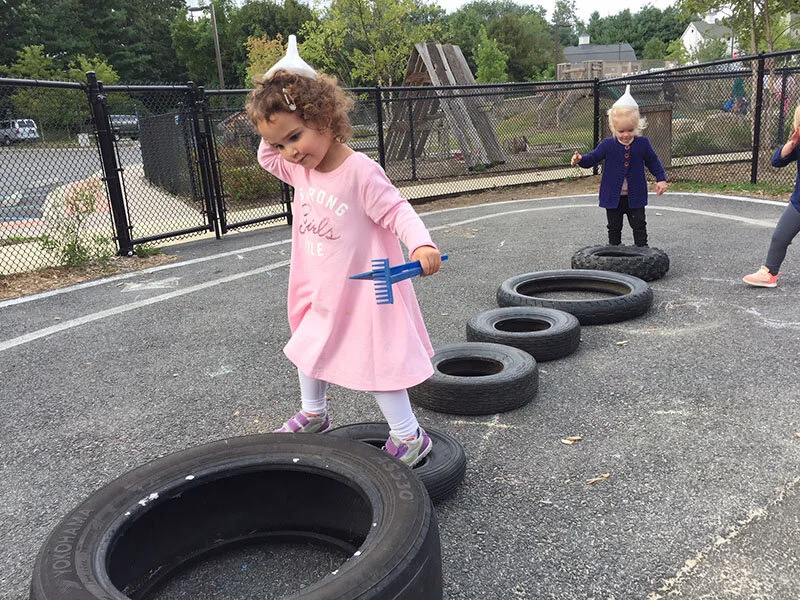
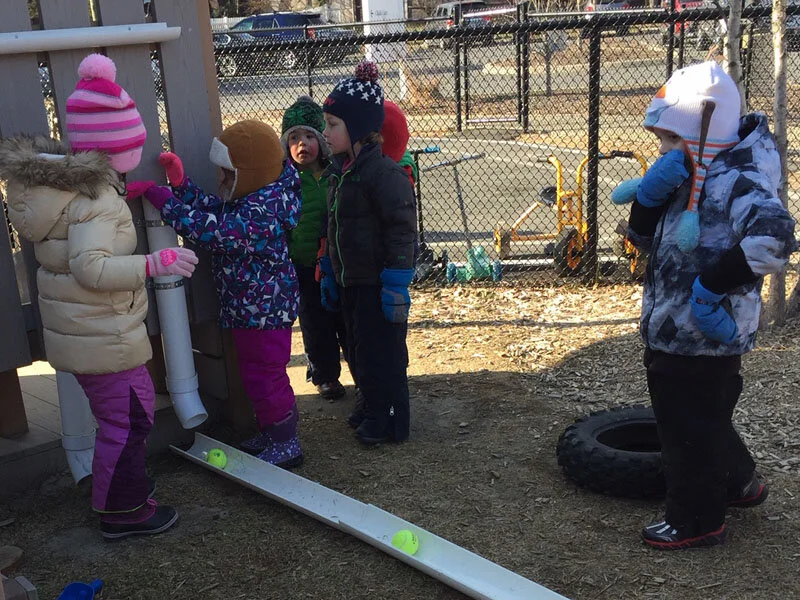
When children at NPCC explore with loose parts, we find that they are using objects in ways that they choose and making discoveries that are meaningful and memorable. Tires are arranged to make interchangeable pathways, shower rings are stacked onto paper towel holders and PVC pipes are aligned to create ball ramps.
From an adult perspective, it is obvious that loose parts create infinitely more opportunities for creative exploration and open-ended collaboration than static materials. From a child’s perspective, it is evident that loose parts just make everything more fun.